|
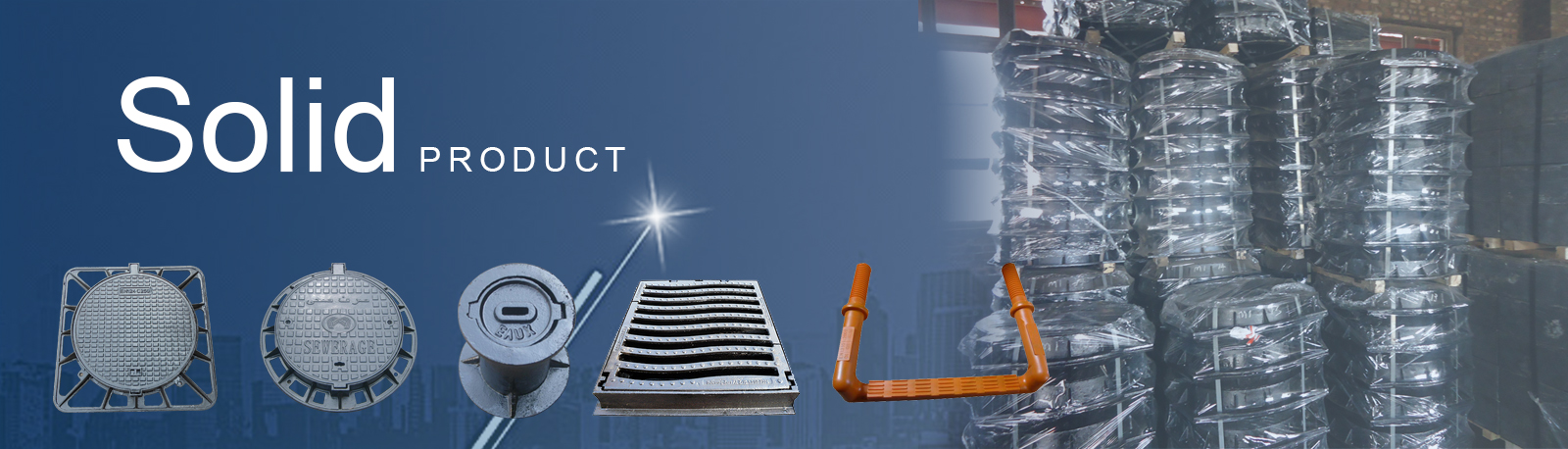
As a core component of municipal drainage systems, ductile iron gully gratings derive their excellent performance from precise production processes and material optimization. Compared with ordinary cast iron gratings, which are prone to brittleness and poor corrosion resistance, ductile iron undergoes multiple special treatments to achieve dual upgrades in material toughness and structural stability. It demonstrates irreplaceable advantages in complex scenarios such as heavy-duty traffic sections and high-humidity, high-salt environments, making it the mainstream choice in current municipal engineering.
In terms of processes, the core lies in the synergistic combination of spheroidization treatment and inoculation treatment. In the early stage of production, raw materials such as pig iron and scrap steel are put into an intermediate frequency induction furnace in proportion and heated to 1400-1450°C for complete melting. During this period, a spectral analyzer is used to monitor the composition of the molten iron in real time to ensure that the carbon and silicon contents meet the standards. Subsequently, 0.03%-0.05% magnesium alloy or rare earth alloy is added to the molten iron as a spheroidizing agent. Through mechanical stirring, the originally flake-shaped graphite is transformed into a spherical shape. This process can increase the tensile strength of cast iron by 2-3 times. To further refine graphite particles and reduce structural defects, 1.2%-1.5% ferrosilicon alloy is immediately added as an inoculant to ensure a uniform internal structure of the castings.
The molding stage mainly adopts sand casting or lost foam casting processes. Among them, lost foam casting can realize one-time molding, avoiding the box-closing deviation of traditional sand casting, and ensuring that the aperture error of the grating is controlled within ±1mm to guarantee smooth drainage. After the castings are cooled, they need to undergo shot blasting and rust removal to remove surface oxide scale, and then select anti-corrosion processes according to the application scenario: hot-dip galvanizing is commonly used for municipal roads; epoxy resin coating is preferred for chemical industrial parks or coastal areas; spray coating can also be chosen in residential areas, which offers rich colors and lower costs. In addition, to address anti-theft needs, some products have angle steel frames embedded in the edge of the gratings and are connected to the manhole base via special anti-theft bolts to prevent illegal disassembly.
In terms of performance, the support of the spheroidization process has enabled a qualitative leap in the product. In terms of strength and toughness, its tensile strength can reach 420-500MPa, yield strength ≥300MPa, and impact toughness ≥15J/cm², which is 3-5 times that of ordinary gray cast iron. In accordance with the national standard GB/T23858-2009, its load-bearing grades cover A15 to F900. Among them, grade D400 products can easily withstand the repeated rolling of heavy trucks over 40 tons without the risk of fracture or deformation during long-term use.
The corrosion resistance and durability are particularly prominent. After standardized anti-corrosion treatment, the service life in ordinary municipal environments can reach 20-30 years, which is more than twice that of ordinary cast iron gratings. In coastal high-salt-fog areas, epoxy resin coating can reduce the corrosion rate by more than 80%, and the annual maintenance cost is only 1/5 of that of traditional products.
The drainage and filtration performance is optimized through design: the grating width is usually 20-30mm, and the spacing is 10-15mm, with a water flow rate of 0.5-1.2m³/s. Under a rainstorm with an intensity of 50mm per hour, it can quickly drain the road surface rainwater and avoid water accumulation. At the same time, the grating structure can effectively intercept debris with a diameter ≥10mm to prevent blockage of underground drainage pipes. In addition, the product surface adopts a diamond-shaped anti-slip texture design, and the edges are rounded. With an anti-slip coefficient of≥0.7, it can effectively prevent pedestrians from slipping even on rainy days, providing comprehensive safety guarantees for use.
The in-depth integration of advanced processes and excellent performance enables ductile iron gully gratings to not only meet the basic needs of municipal drainage but also adapt to the special requirements of different scenarios. It provides a solid guarantee for the stable operation of urban drainage systems and helps improve the durability and safety of urban infrastructure.
|